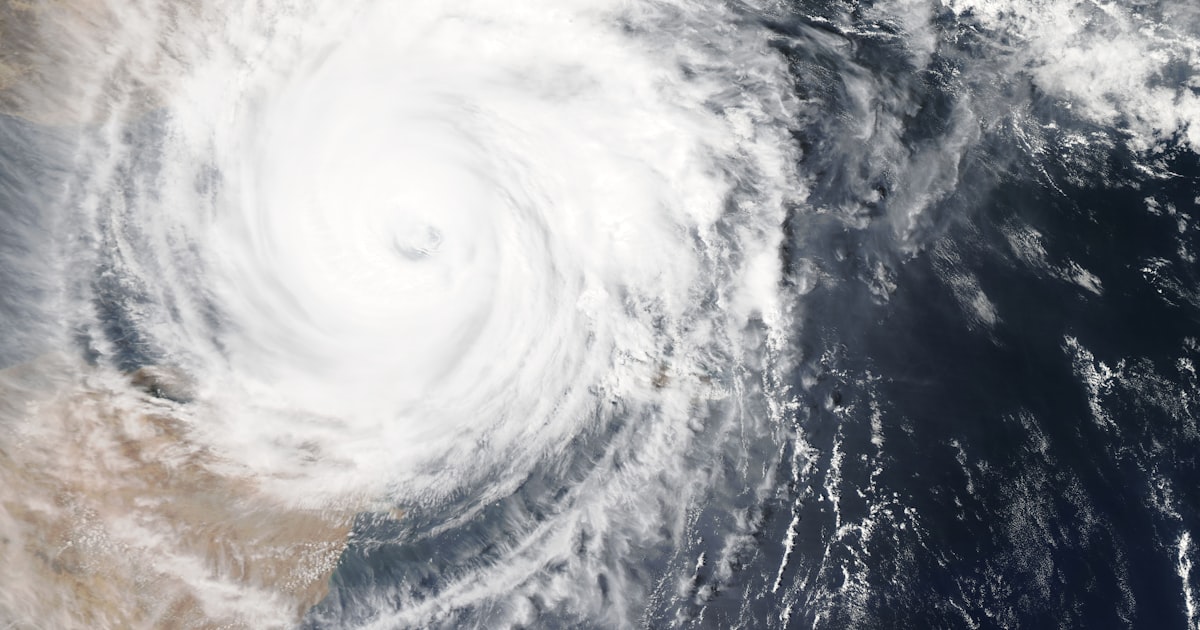
Hurricane Andrew (1992): The Storm That Invented Modern Florida Insurance
On August 24, 1992, Hurricane Andrew struck southern Miami-Dade County as a Category 5 hurricane with sustained winds of 165 mph at landfall in Homestead. The storm caused $26.5 billion in insured losses (1992 dollars) and roughly $50 billion in adjusted 2026 dollars. Eleven insurance companies became insolvent in the weeks and months that followed: Ocean Casualty Insurance, Founders Insurance, AdvancedTrust Insurance, and several smaller carriers were the first wave. State Farm, Allstate, and other national carriers faced solvency reviews and announced sweeping non-renewal programs.
Before Andrew, Florida's insurance market functioned like any other state's. Standard ISO HO-3 policies covered hurricane damage as a named peril with a flat-dollar deductible (typically $250 or $500). Reinsurance was light. Building codes varied by jurisdiction. After Andrew, every assumption was wrong. Wind models had dramatically underestimated peak gusts in built-up coastal areas. Building inspectors had been signing off on roof installations that came apart in 130 mph winds. And insurers discovered that the Miami-Dade construction sector lacked the capacity to rebuild 130,000 homes simultaneously, driving claim severity to 200-300% of pre-storm estimates.
The legislative response came in 1993 with the creation of the Florida Residential Property and Casualty Joint Underwriting Association (FRPCJUA), the first explicit residual market mechanism for Florida homeowners. The state also passed the original moratorium on non-renewals (a 5% annual cap on policy non-renewals per insurer). The Florida Building Code, eventually rewritten in 2002 with national-leading wind-resistance standards, traces directly back to Andrew. So does the percentage hurricane deductible — Andrew claims convinced regulators that flat-dollar deductibles understated catastrophe exposure, and within five years, 2% and 5% percentage deductibles had become standard.
The deepest lesson from Andrew was structural: Florida's insurance market cannot sustain itself on private capital alone in the path of a Cat 5 hurricane. Every reform between 1993 and 2025 has wrestled with that fundamental fact, and every market collapse — including 2022's — was a re-statement of it.
The 2004-2005 Four-Storm Season: When Florida Almost Ran Out of Insurance
The 2004 hurricane season hit Florida with four hurricanes in 44 days: Charley (August 13, Cat 4 at Punta Gorda), Frances (September 5, Cat 2 at Hutchinson Island), Ivan (September 16, Cat 3 at Pensacola), and Jeanne (September 25, Cat 3 at Stuart, retracing Frances's path with brutal precision). Combined insured losses exceeded $26 billion. The 2005 season followed with Dennis (Cat 3 in the Panhandle in July) and the catastrophe of Hurricane Wilma (October 24, Cat 3 at Cape Romano), which cut a path of destruction across South Florida and triggered the largest property insurance payout in state history at the time: $20.6 billion.
The combined two-year impact was unprecedented. Citizens Property Insurance Corporation (created in 2002 from the merger of FRPCJUA and the Florida Windstorm Underwriting Association) saw policy counts triple. Citizens incurred $1.7 billion in deficits after Wilma alone, and the Florida Insurance Guaranty Association (FIGA) levied multiple rounds of assessments against private insurance companies. Premium rates statewide rose by an average of 75% between 2004 and 2007, with some coastal areas seeing 200-300% increases.
Three lasting structural changes came out of 2004-2005. First, the Florida Hurricane Catastrophe Fund (FHCF), created in 1993, was substantially expanded in 2005 to provide reinsurance capacity to private carriers. This reduced the unit cost of reinsurance, but it also socialized catastrophe risk across all Floridians via FHCF assessments. Second, Citizens transitioned from a true market of last resort into a politically-managed price competitor with the private market — a tension that has never been fully resolved. Third, the Office of Insurance Regulation (OIR) gained vastly expanded authority to review rate filings, particularly for "use and file" rate changes that had previously taken effect immediately.
The pattern from 2004-2005 was the template for 2022-2024: a multi-storm shock collapses private market capacity, Citizens absorbs the displaced policies, the legislature responds with reform, and rates rise statewide for years afterward.
Hurricane Wilma (2005) and the FIGA Assessment Era
Hurricane Wilma deserves separate treatment because of what it revealed about Florida's reinsurance and assessment system. Wilma made landfall in Cape Romano on October 24, 2005 as a Category 3, then weakened slightly while crossing the state, exiting near Palm Beach as a strong Category 2. The damage swath was unusually wide because Wilma maintained tropical storm-force winds across nearly the entire Florida peninsula at one point — the storm's wind field was among the largest ever recorded in the Atlantic basin.
Total insured losses reached $20.6 billion, and the political fallout was immediate. Poe Financial Group, parent of three Citizens take-out carriers (Atlantic Preferred, Florida Preferred, and Southern Family), failed in 2006 in the storm's wake — the largest Florida insurance failure since Andrew. Their failure triggered FIGA assessments that ran for nearly four years. Every Floridian with property insurance, auto insurance, or commercial coverage paid 2-3% in FIGA charges between 2006 and 2010 to cover the cost of the Poe collapse and several smaller insolvencies.
Wilma also forced a reckoning over loss adjustment expense (LAE). Average LAE on Wilma claims ran 18-22% of indemnity, an astonishing figure compared to the pre-Andrew norm of 8-10%. The driver was the emergence of public adjusters and assignment of benefits arrangements that became dominant after 2005. Public adjusters extracted higher settlements from insurers but at materially higher expense ratios — a cost that was fully embedded in subsequent rate filings and that became the litigation crisis core of the 2018-2022 period.
The lesson of Wilma is that hurricanes do not just destroy structures; they destroy actuarial assumptions. The 2005 storm forced insurers to re-rate water damage exposure, mold coverage, and litigation costs. Every subsequent reform — including the 2022 elimination of one-way attorney fees in property insurance disputes — traces conceptually to the data Wilma created.
Hurricane Irma (2017): The First Modern Litigation Storm
Hurricane Irma made landfall in Cudjoe Key on September 10, 2017 as a Category 4 with sustained winds of 132 mph, then crossed Florida and made a second landfall near Marco Island. Irma was an unusual storm in insurance terms because the wind damage was widely distributed but rarely catastrophic at any single property — the storm produced an enormous number of moderate claims rather than a smaller number of total losses.
Insured losses came in at approximately $17 billion, but the litigation patterns were unprecedented. Roughly 60,000 Irma-related lawsuits were filed against insurance carriers between 2018 and 2021, the highest rate of post-storm litigation in Florida history at that point. The driver was the 2002 statute creating one-way attorney fee shifting in property insurance disputes (627.428), which made property litigation economically irresistible for plaintiff firms. A small denial or underpayment dispute could generate six-figure attorney fees regardless of the underlying claim's size.
Irma exposed the assignment of benefits (AOB) crisis at scale. Water remediation contractors, with assignments from policyholders, would file inflated claims — sometimes for non-existent damage — and litigate carriers into settlements. By 2018, AOB lawsuits represented over 30% of all property insurance litigation in Florida. Carriers responded with rate increases, non-renewals, and ultimately departures from the state. The 2019 AOB reform (HB 7065) restricted some of the worst abuses but did not eliminate the litigation incentive.
Irma also produced the first wave of modern Florida insurer failures: Sawgrass Mutual was placed in receivership in 2019, citing Irma-related losses and litigation. The pattern was a preview of 2022. From 2020 to 2024, twelve Florida-domiciled property insurers either failed, withdrew from the state, or were placed under enhanced supervision: Lighthouse, FedNat (parent of Maison and Monarch), Avatar, St. Johns, Florida Specialty, American Capital Assurance, Southern Fidelity, Weston, Vesta Fire, Bankers Insurance, Centauri, and ICW Group's Florida operations all exited or failed during this window.
Hurricane Michael (2018): The Forgotten Panhandle Cat 5
Hurricane Michael made landfall near Mexico Beach on October 10, 2018 with sustained winds of 161 mph — initially classified as a Category 4, later upgraded to Category 5 by NHC after post-storm analysis (only the fourth Cat 5 to strike the U.S. mainland). Michael wiped Mexico Beach off the map: roughly 1,500 of the town's 1,700 buildings were destroyed or severely damaged. Insured losses reached $7.4 billion.
Michael is critical to Florida's insurance history because it broke a long-standing assumption: that the Panhandle was a "low-risk" market compared to South Florida and the lower west coast. From the 1950s through 2017, the Panhandle had experienced major hurricane impacts (Eloise 1975, Opal 1995, Ivan 2004, Dennis 2005), but premium rates in Bay, Gulf, Franklin, Wakulla, and Jefferson counties had remained dramatically below those of Miami-Dade and Broward. Michael shattered that pricing model.
Post-Michael, the Panhandle saw rate increases of 40-80% across most carriers. Properties on the immediate coastline that had previously paid $1,200/year began paying $3,500-$4,500. Wind mitigation inspections, which had been rare in the Panhandle, became routine. The Florida Building Code's HVHZ (High Velocity Hurricane Zone) protections — previously limited to Miami-Dade and Broward — were partially extended, and updated wind speed contours pushed Panhandle design wind speeds from 130 mph to 150 mph in some zones.
Michael also created a generation of underinsured policyholders. Many Panhandle homes were insured to pre-2018 replacement cost values that had not kept pace with the post-storm construction cost spike (Mexico Beach rebuilding ran 35-50% above pre-storm cost per square foot due to labor scarcity and new code requirements). Coinsurance disputes — where carriers reduced claim payouts because the policyholder was insured below 80% of replacement cost — were the most contentious legal issue of the post-Michael years.
Hurricane Ian (2022): The $60 Billion Catastrophe and the End of an Era
Hurricane Ian made landfall on Cayo Costa as a Category 4 on September 28, 2022, with sustained winds of 150 mph and a 12-15 foot storm surge that obliterated Fort Myers Beach, Sanibel Island, Pine Island, and Naples. Total insured losses are now estimated at $60 billion — the costliest U.S. hurricane after Katrina (2005). The storm killed 156 people, more than any Florida hurricane since 1935.
Ian's insurance impact was structural, not just financial. Within six months of the storm, the Florida property insurance market had effectively collapsed. Citizens grew from 1.06 million policies in September 2022 to 1.4 million by mid-2023. Reinsurance prices for Florida-exposed business spiked 40-60%. National AM Best-rated carriers refused to write new business in Lee, Charlotte, Collier, and Sarasota counties. Average premium statewide rose to over $4,500/year, the highest in the nation.
The legislative response in December 2022 (SB 2-A) and the subsequent SB 7052 (May 2023) marked the most aggressive insurance reform in Florida history. Key changes: elimination of one-way attorney fee shifting in property insurance cases (the engine of the Irma litigation crisis), prohibition of assignment of benefits in property insurance, restructured Citizens depopulation rules with the 20% private offer mandate, mandatory flood insurance for Citizens policyholders, and a $1 billion taxpayer-funded reinsurance program (Reinsurance to Assist Policyholders, RAP, and the related Florida Optional Reinsurance Assistance, FORA).
Ian also exposed a flood-vs-wind dispute crisis. Florida's standard homeowners policy excludes flood (NFIP or private flood is required separately), but the line between wind-driven rain (covered) and storm surge (excluded) became a battleground in Ian claims. Anti-concurrent causation clauses — which exclude any loss where excluded perils contribute, even if covered perils also contribute — produced unfavorable outcomes for thousands of policyholders. The 2023-2024 reform requiring flood insurance for Citizens policyholders is a direct response to this Ian-era pattern.
Hurricane Idalia (2023) and the Reform-Era Test
Hurricane Idalia made landfall near Keaton Beach on August 30, 2023, as a Category 3 with sustained winds of 125 mph. Idalia was the first major test of the post-2022 reform framework. The Big Bend region — historically one of the least-developed coastal areas in Florida — took the brunt, with insured losses of approximately $3.6 billion.
Idalia's smaller financial scale concealed a critical signal: post-reform claims handling was meaningfully different. Average time to first payment dropped from 91 days (Ian) to 47 days (Idalia). Litigation rates were 60% lower. Fraud reports dropped sharply, partially due to AOB elimination and partially because Florida's new pre-suit notice requirements created a 60-day cure window for carriers to address disputed claims.
But Idalia also revealed continuing weaknesses. Roof claims remained the dominant claim category (about 65% of total claim count), and disputes over roof age and depreciation continued. The new "right to repair" provisions — which allow carriers to elect repair over cash settlement in some circumstances — produced their first wave of contested claims. And the Big Bend region, which had been historically underinsured and under-mitigated, saw a substantial number of total losses on uninsured or underinsured properties.
The Idalia data set will be the most important reference point for evaluating reform efficacy through 2027. If Idalia's loss adjustment improvements hold during a larger event (a future Cat 4 in a populated coastline), the post-2022 framework will be considered durable. If a future major hurricane reverts to Ian-era dispute patterns, expect a new reform cycle in 2027-2028.
Patterns and What 2026+ Holds
Thirty-three years of Florida hurricane history reveals consistent patterns. First, every major storm produces 3-5 carrier failures within 24 months. The 2025 baseline (post-Ian, post-Idalia) of roughly 30 active personal residential carriers in Florida is structurally fragile. A 2026 or 2027 Cat 3+ landfall in a populated area should be expected to produce additional carrier failures.
Second, premium rates lag claim severity by 18-30 months. Florida's 2026 average premium of approximately $5,400/year reflects 2022-2024 storm experience. If 2026 produces another major event, expect 2027-2029 rate increases of 25-40% statewide. If 2026 is a benign season, expect modest stability — but no real decreases until 2028 at earliest, because reinsurance pricing is sticky.
Third, the legislative pattern is reactive but accelerating. Andrew produced a five-year reform cycle. Wilma's reforms took three years to fully implement. Irma-era reforms (2019 AOB, 2021 SB 76 roof claim provisions) took 18-24 months. The post-Ian SB 2-A and SB 7052 framework was implemented in roughly 12 months. The next major storm will produce reforms within 6-12 months — and those reforms will likely focus on flood-wind anti-concurrent causation, roof depreciation rules, and Citizens financial structure.
Fourth, Citizens is structurally embedded. Every reform cycle since 1993 has tried to shrink Citizens, and Citizens has grown after every major event. The 20% rule and aggressive 2025-2026 depopulation are succeeding in the short term, but the underlying market dynamics (limited reinsurance capacity, ongoing climate exposure, sticky construction costs) ensure that Citizens will remain Florida's de facto wind insurer for the foreseeable future.
For homeowners reading this in 2026: the insurance market is more stable than 2022 but no more durable. The next hurricane will reveal whether the reform-era framework holds. Plan accordingly: maintain wind mitigation credits, document your home's condition annually, fund a personal claim reserve equal to your hurricane deductible, and treat insurance shopping as an annual ritual, not a one-time event. Florida's history says another reckoning is coming. The only question is when.